How to Wash a Wool Sweater: Start With Its Care Label
Choose a washing method for a wool sweater from its actual care label, select a suitable detergent and prepare a flat drying space before getting it wet.
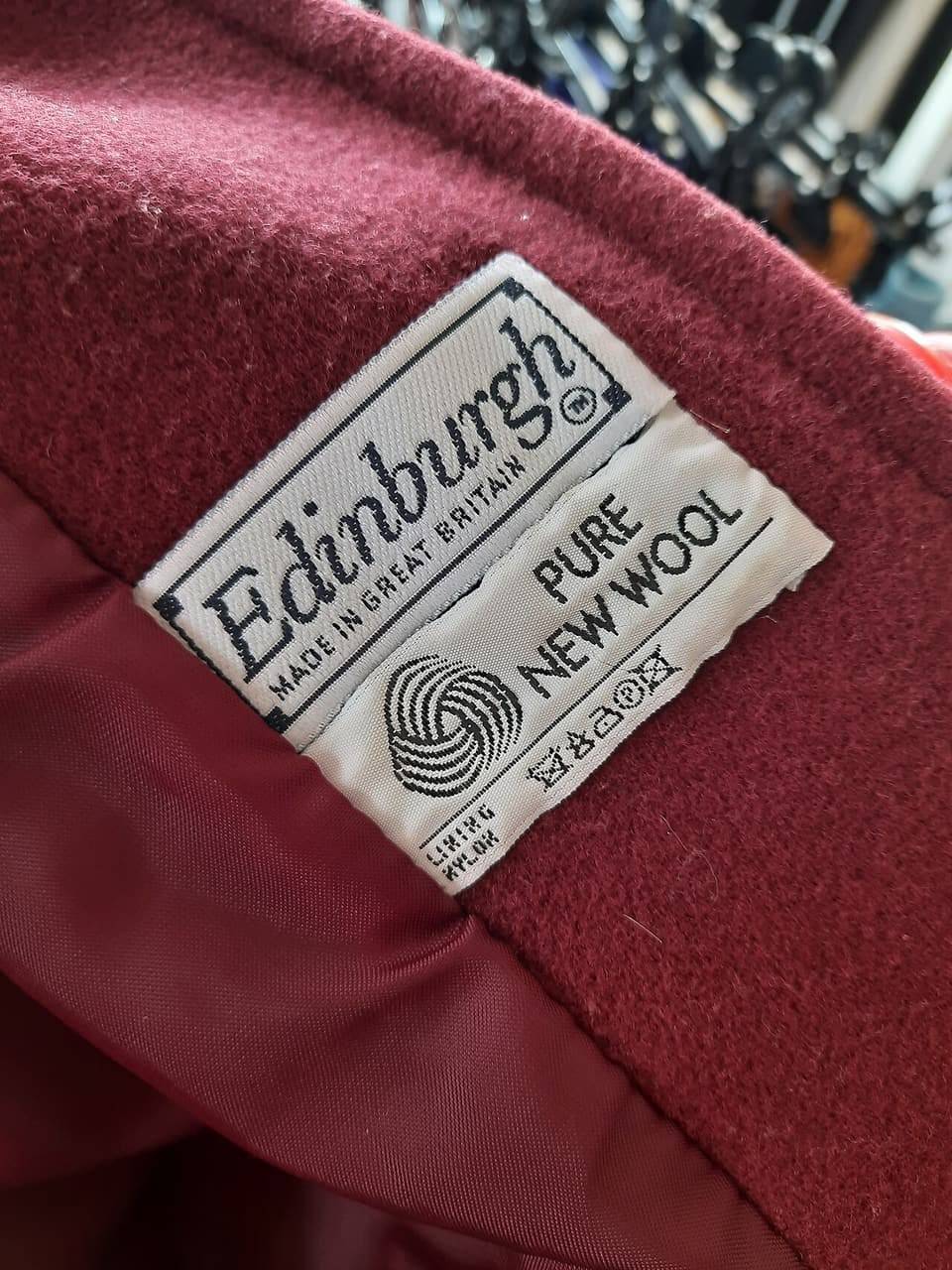
A wool sweater does not come with one universal washing recipe. The useful first step is to read the finished garment’s care instructions, including the drying instruction. A machine-washable knit, a hand-wash-only piece and a dry-clean-only sweater belong on different routes, even when all three list wool as their main fibre. Prepare that route before opening the detergent or filling a basin.
Choose the route the label actually permits
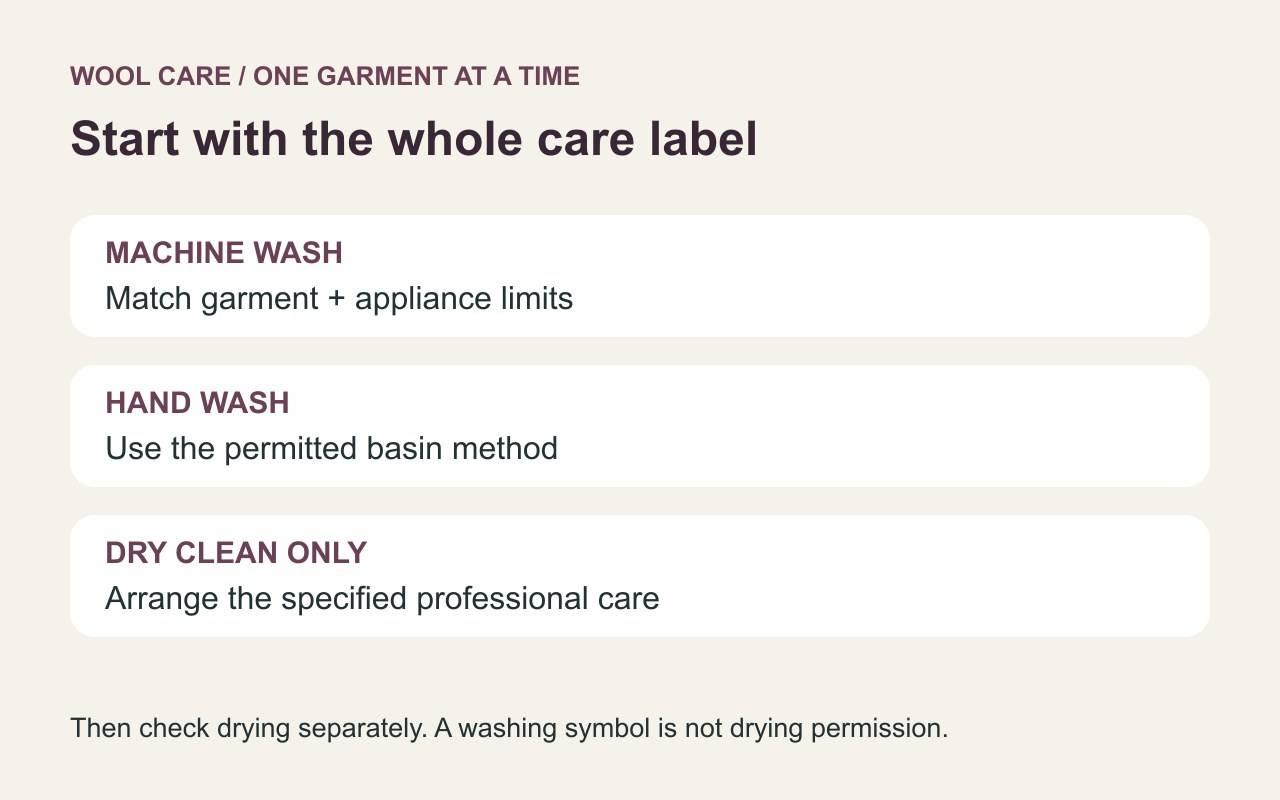
Woolmark’s sweater guidance begins machine washing with a condition: the garment must be labelled for it. A wool program on the machine cannot grant permission that the garment does not have. Equally, a familiar fibre percentage does not describe every dye, trim or construction detail in the finished piece.
| What the garment says | What to decide before starting |
|---|---|
| Machine wash, with stated limits | Match those limits to the appliance manual and the permitted wool program. |
| Hand wash | Prepare a separate basin and an appropriate gentle process; do not translate this automatically into a machine cycle. |
| Dry clean only | Use the specified professional care rather than a household washing experiment. |
| Unreadable or missing instructions | Ask the maker or an appropriate cleaner before wetting a valuable or unfamiliar piece. |
Our guide to reading clothing care labels explains how washing, drying and other instructions fit together. Here the task is narrower: turn those instructions into a workable plan for one sweater.
Assemble the whole job, including the drying space
Put the sweater, its readable instructions, the machine manual if needed and the detergent together. Look for damage or a mark that needs advice before the wash. Take a reference photograph of the sweater laid flat if you would find that useful when arranging it afterwards. This is a practical record, not a guarantee that an unsuitable process can be reversed.
Also decide where the wet knit will go. A clear, supported drying surface is easier to arrange while the sweater is still dry. If that surface is currently covered with other laundry, solve that problem first. Beginning a wash and hoping a suitable place becomes available later creates an avoidable rushed decision.
Select detergent by suitability, not by fragrance
Woolmark recommends a mild, neutral wool detergent and advises against heavy-duty products, enzyme-containing biological detergents and bleach-containing products. Check the actual product directions for suitability and dose. A bottle described as gentle in a general marketing phrase is less useful than a clear statement about the material and method you intend to use.
Do not pour extra detergent into the process to compensate for uncertainty about cleaning. If the recommended amount is unclear, resolve that question from the product instructions. Keep stain treatments and other additives out of the plan unless both the garment and product instructions support them. Several separately familiar products do not automatically become one appropriate mixture.
If machine washing is permitted
Use the garment’s limits and the machine’s explanation of its wool program together. Woolmark suggests turning a suitable sweater inside out or using a laundry bag. Neither step overrides the care label. Check the selected temperature and other settings before pressing start, particularly if the appliance remembers choices from the previous load.
Avoid treating the cycle’s friendly name as the entire instruction. Two machines may implement a named program differently. If the manual does not make the required process clear, pause rather than improvising from a cotton load you usually run. Keep a short note of a confirmed suitable setting so the same uncertainty does not recur next time.
If hand washing is permitted
Woolmark describes a gentle basin method with lukewarm water, wool detergent and thorough rinsing. Follow the garment’s own temperature restrictions and the product directions throughout. Support the wet garment while handling it and avoid rubbing or wringing it as if it were a sturdy cleaning cloth.
A useful household setup is a clean basin, a clear place to put the sweater and the drying surface already prepared nearby. Keep the label photograph available rather than trying to remember a partly legible symbol midway through the job. If an unexpected problem appears, stop escalating the treatment and obtain advice; more heat or force is not a general-purpose correction.
Dry the knit with its shape supported
Woolmark recommends drying sweaters flat unless the care label permits tumble drying. Its drying guide describes a pale, lint-free towel or suitable mesh support, gentle reshaping and a position away from direct sun and heat. A wet knitted sweater hanging from its shoulders can stretch under its own weight.
Spread the piece without leaving sleeves bundled underneath it. Keep the neckline and body arranged naturally rather than pulling them to an ambitious new size. Check the place occasionally so the sweater is not forgotten beneath another load. Allow it to finish drying before putting it into storage; a deadline for wearing it is a reason to plan earlier, not to invent a hotter drying method.
Save the decision for the next wash
Record the garment’s instructions, the suitable detergent and the permitted process together. For example, a note might identify the blue cardigan, show its full label and name the manual page you checked. That is more usable than an anonymous photograph of a washing symbol among hundreds of phone images.
The aim is a repeatable decision, with fewer assumptions each time. A wool sweater may need a little preparation, but the job becomes clearer when the washing method, product and drying arrangement have all been chosen before the garment gets wet.